
Insulated enclosure for inverter, batteries and pump control
General information
Purpose
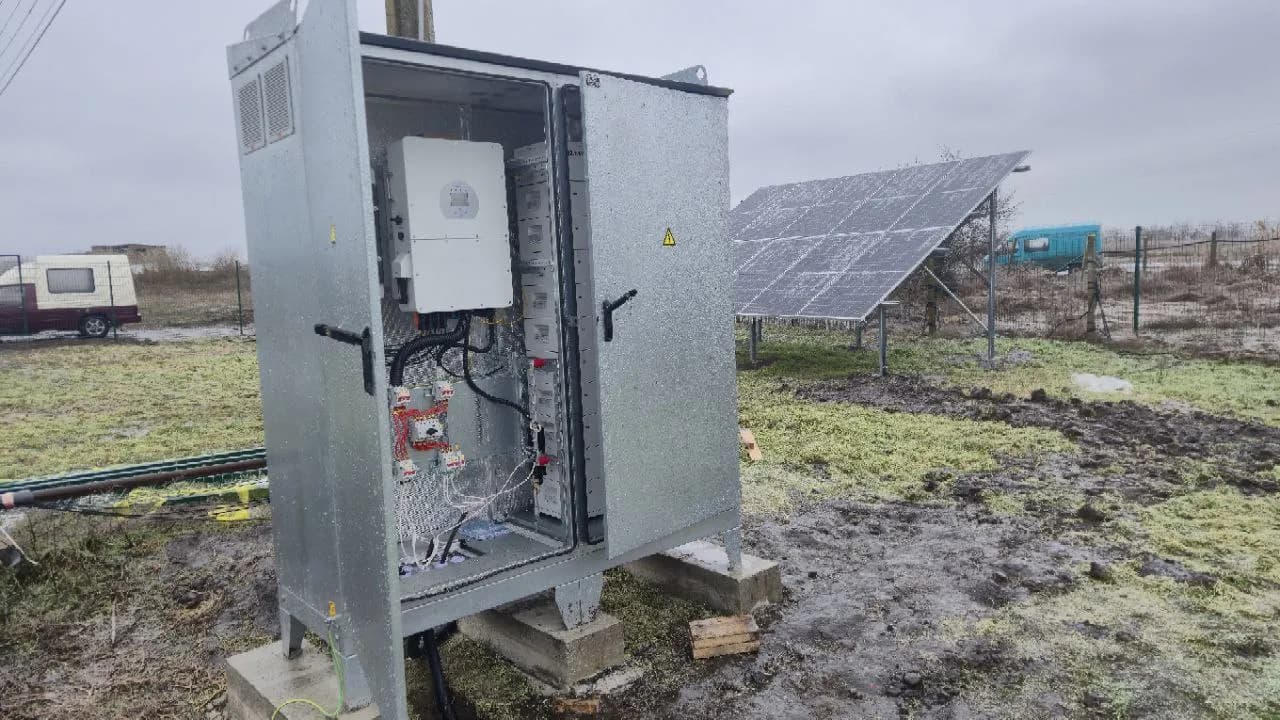
An enclosure for an inverter and batteries — an insulated outdoor cabinet built by LK Energy that holds the entire power system of a stand-alone site: a hybrid inverter, lithium batteries, a soft starter or variable-frequency drive for the pump and, if required, a telemetry unit. It is installed in the open air — no separate building, container or on-site construction is needed. In effect it is the plant room of the site, packed into a single box.
Typical applications: artesian wells and pumping stations with a solar array, remote sites running on battery backup, and locations with no permanent building.
Why climate control is a requirement, not an option
Lithium batteries must not be charged below 0 °C — the battery management system simply blocks charging in the cold. An uninsulated box in winter means a battery that cannot charge and no backup at all — precisely when outages are most likely.
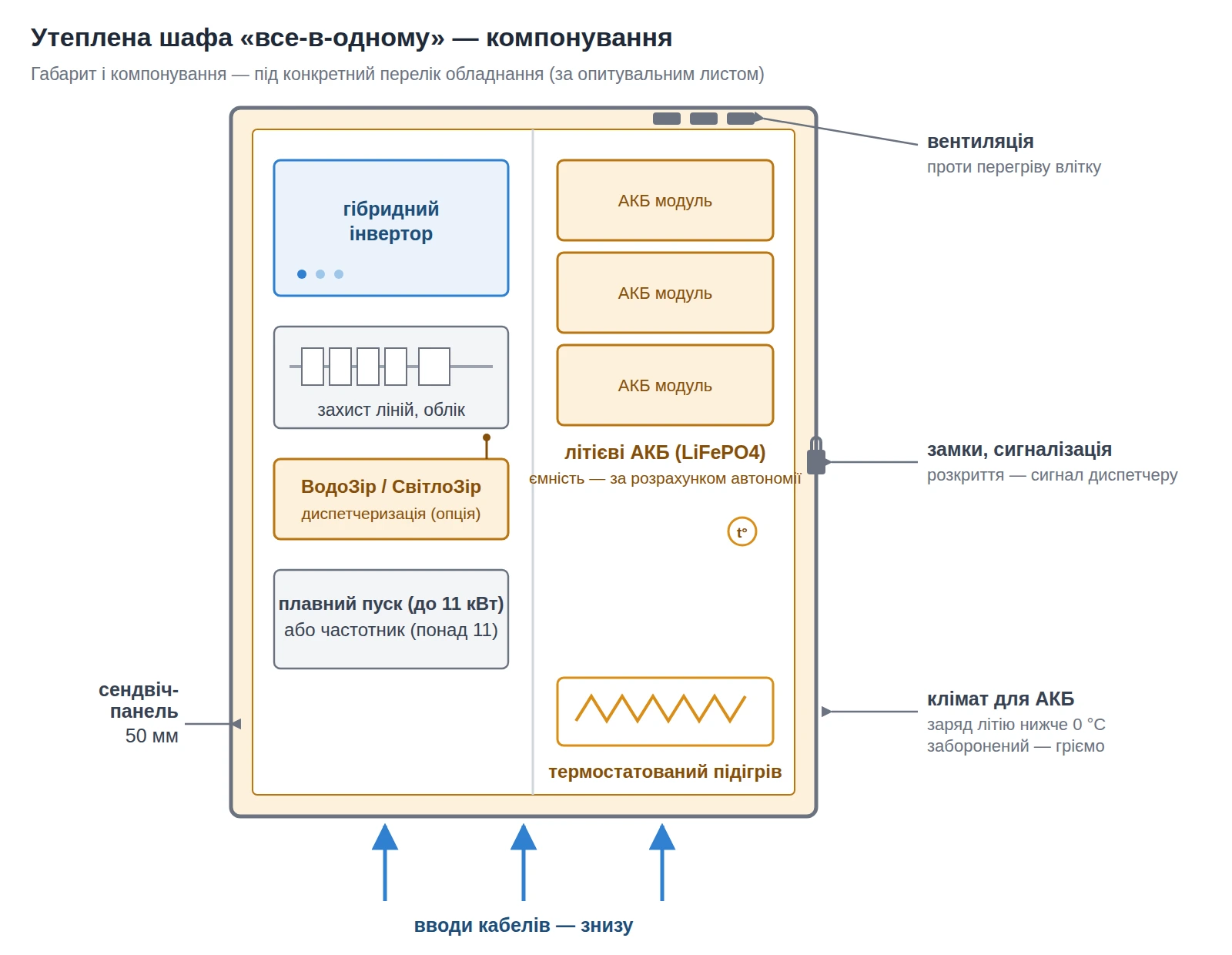
So the cabinet is not merely insulated: thermostatically controlled heating keeps the batteries inside their working temperature window, and ventilation stops the lithium cells overheating in summer. In hard frost the heater draws in the order of 1–2 kWh a day — negligible against the battery capacity, and it is accounted for when the capacity is sized.
What is inside
The exact scope is set by the project; the base configuration is:
- hybrid inverter — runs off solar, the grid and the batteries;
- lithium batteries (LiFePO4) — capacity sized to the required autonomy;
- soft starter (for pumps up to and including 11 kW) or a variable-frequency drive (above 11 kW, and wherever pressure has to be regulated);
- telemetry unit developed in-house by LK Energy — VodoZir (optional);
- line protection devices, metering and an earthing loop.
Design features
- 50 mm sandwich panel insulation on the walls and doors;
- climate control: thermostatically controlled heating plus ventilation, with temperature sensors;
- vandal-resistant construction, locking doors;
- intrusion alarm on door opening — the signal goes to the telemetry dashboard rather than staying on site;
- separate compartments for the inverter, the batteries and the switchgear, with front access for servicing;
- cable entries from below;
- outdoor installation, all year round;
- dimensions and layout are built around the specific equipment list.
Technical data
| Type | Insulated all-in-one enclosure |
| Purpose | outdoor housing for an inverter, batteries and motor-starting equipment |
| Voltage class | 0.4 kV |
| Insulation | 50 mm sandwich panel |
| Climate control | thermostatically controlled heating plus ventilation, temperature sensors |
| Access protection | vandal-resistant construction, locks, intrusion alarm |
| Motor starting | soft starter up to 11 kW; variable-frequency drive above 11 kW or where pressure control is needed |
| Batteries | lithium (LiFePO4), capacity sized to the required autonomy |
| Telemetry | VodoZir, developed in-house — optional |
| Installation | outdoor, all year round |
| Dimensions | to project / specification |
| Manufacturing | LK Energy, plant in Odesa |
Exact dimensions, layout and scope of supply are set from a completed questionnaire for the specific equipment list.
Description and application
The enclosure for an inverter and batteries (insulated, all-in-one) is manufactured in-house by LK Energy (Odesa) for sites where the equipment has to stand in the open air: wells, pumping stations and remote locations with a solar array and battery backup. A single cabinet houses the hybrid inverter, the lithium batteries, the soft starter or variable-frequency drive and the protection gear — no separate building is needed for a plant room.
The key difference from an ordinary outdoor box is climate control. A lithium battery will not charge in the cold, so without heating the winter backup exists only on paper. A 50 mm sandwich panel, thermostatically controlled heating and ventilation keep the equipment within its working range all year, while vandal-resistant construction with an intrusion alarm addresses the problem of a site left unattended in open country.
The cabinets are built at the LK Energy plant in Odesa: electrical installation since 2005, in-house switchgear manufacturing since 2015 — more than 3,000 units delivered. Dimensions, layout and scope of supply are all set by the project.
Projects and price lists use several names for this product: insulated battery box, all-weather inverter cabinet, outdoor container cabinet for a solar plant. They all refer to the same product — the insulated all-in-one enclosure built by LK Energy.
Questionnaire for a quotation →
See also: Solar power for artesian wells with telemetry — the complete package this cabinet forms the core of; street lighting telemetry (SvitloZir) — the same device applied to lighting networks.
The warranty for the insulated enclosure is 2 years (extended to 5 years by agreement); enclosure metalwork — 10 years.
Find the right equipment for your site
Answer them and we will come back with a configuration and a ballpark price for your site.
FAQ
Why does the cabinet need heating — is insulation not enough?
Do you fit a soft starter or a variable-frequency drive?
Can the cabinet be installed out in a field, with no building?
What battery capacity do you specify?
Is the telemetry unit mandatory?
Is the cabinet a standard product or built to order?
Which inverter and which batteries fit inside?
How is ventilation arranged — will the battery overheat in summer?
Price request:
Insulated enclosure for inverter, batteries and pump control
Send us your single-line diagram or specification — we will estimate the configuration, lead time and price. Preliminary estimate within 24 business hours.
+380 67 104 94 91