
How to Fill Out the Questionnaire for a KTP or KSO: A Step-by-Step Guide
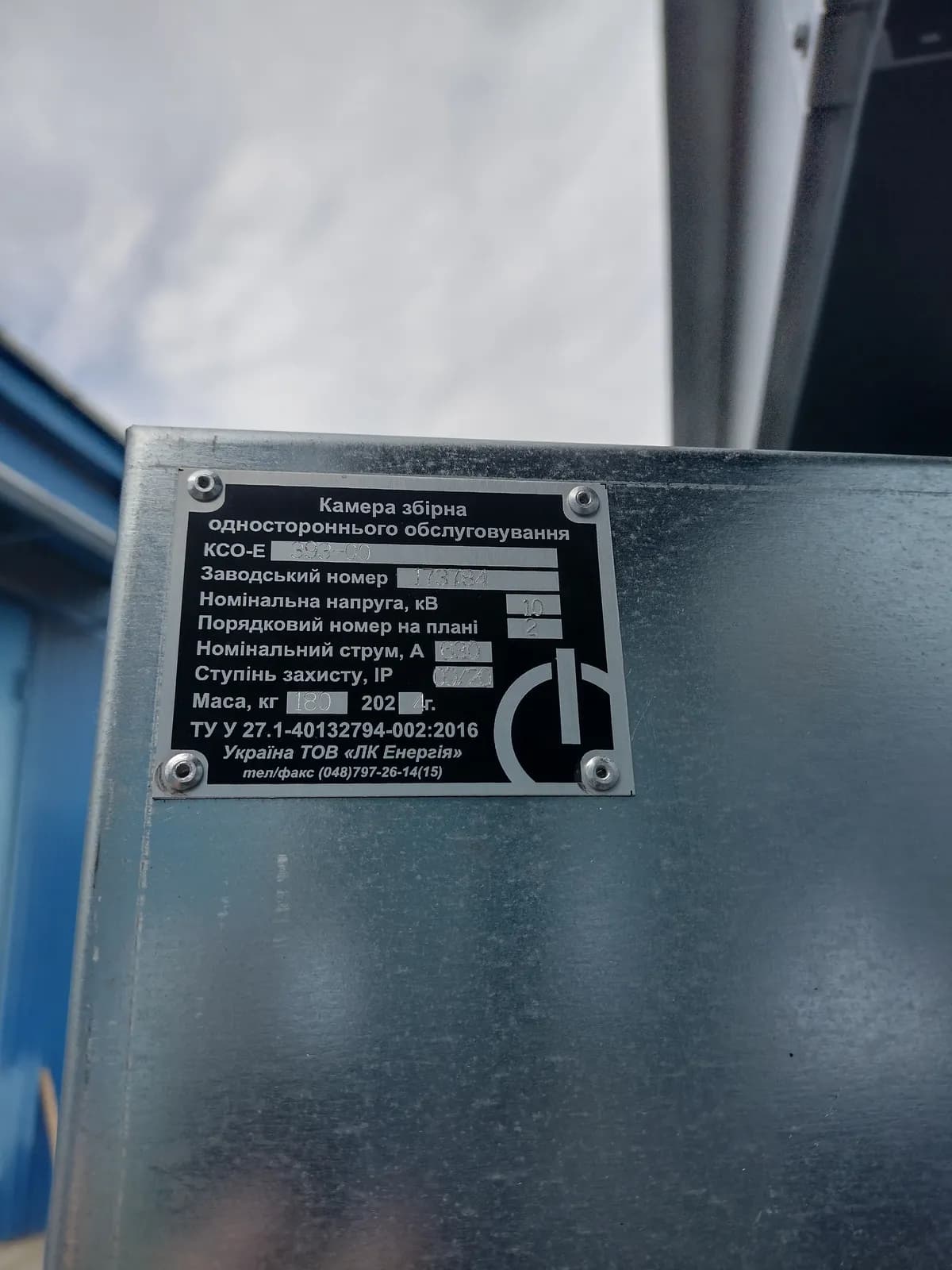
The questionnaire is an order form for switchgear equipment: a single document in which the design engineer or customer records the input data for manufacturing — from rated voltage to the purpose of each feeder. For standard products (KTP [package transformer substations], KSO/KRUN [metal-enclosed switchgear cubicles], ShchO-90 panels [outdoor switchboard panels], VRP [low-voltage switchgear] cabinets), the form already contains a single-line diagram and a parameter table — all that remains is to fill in the fields.
Without a questionnaire, the same data is gathered through correspondence: the manufacturer asks questions, the design engineer answers, and each round takes days. A correctly completed questionnaire removes most questions before production starts and noticeably shortens the approval cycle for the technical part of the order.
You do not have to fill it in yourself: most often we complete the questionnaire sheet ourselves. Leave your number or send a single-line diagram — an LK Energy engineer will fill the sheet in together with you over the phone: +38 067 104 94 91 or leave your number.
Step 1. Network and Main Circuit Parameters
- rated voltage (10(6) kV for cubicles, 0.4 kV for panels and VRP cabinets) and the number of busbar sections;
- rated current of the incoming line and busbars;
- busbar material;
- short-circuit current (SCC) at the connection point — if known. If not, note this: the manufacturer's engineers will verify the equipment's withstand rating.
Step 2. Composition and Purpose of Cubicles or Panels
- for KSO/KRUN: the type of each cubicle — incoming line, sectionalizing circuit breaker, outgoing line, VT (voltage transformer), ATP (auxiliary transformer for own needs), spare;
- for ShchO-90 panels and VRP cabinets: the composition of panels and the purpose of each feeder.
A feeder's purpose is not a formality: "pumping station," "residential building," "spare" — this determines the circuit logic, the composition of protections, and redundancy. Mark the composition directly on the form's single-line diagram.
Step 3. Switching Devices and Protection
- 10 kV: circuit breaker type, the cubicle's protection composition, the need for ATS (automatic transfer switch) — on incoming lines and the sectionalizing breaker;
- 0.4 kV: the type of switching device on the incoming line and outgoing lines (circuit breaker or disconnect switch), device ratings, and trip-unit settings for circuit breakers — if these have already been determined by the design.
Step 4. Measurement and Metering
- current transformers: transformation ratio; for commercial metering — accuracy class 0.5S, for 10 kV protection circuits — a 10P core;
- voltage transformers — for 10 kV switchgear;
- meter: type and who supplies it (customer or manufacturer);
- whether ASKOE — an automated system for commercial electricity metering (modem, data transmission interfaces) — is needed.
Step 5. Design Execution and Installation Conditions
- indoor or outdoor installation, enclosure protection rating (IP);
- climatic design; for outdoor installation — heating, lighting, ventilation of compartments;
- dimensional constraints of the room or site — if any exist, indicate them right away: the layout is determined at the outset.
Common Mistakes
- Feeder purposes not specified
- only device ratings are given. The manufacturer cannot verify the circuit logic, and the questions come back to the design engineer.
- No metering data
- CT accuracy class, meter type, and the need for ASKOE are clarified only at the production stage — this halts fabrication of the metering unit.
- Heating and ventilation forgotten for outdoor installation
- For equipment installed in the open air, compartment heating and lighting circuits are part of the circuit design, not a "later" option.
- No contact person from the design side
- Technical questions are routed through the customer as an intermediary — every clarification stretches out over weeks.
Frequently Asked Questions
What if I don't know some of the parameters?
Fill in what is known and mark the unknown fields. The manufacturer's engineers will select the remaining parameters and confirm them with you before production starts — that is exactly what the questionnaire is for. If the SCC or trip-unit settings have not yet been determined, fill in what is known and the engineers will clarify the rest.
Do I need to add my own single-line diagram?
The standard-solution forms already include single-line diagrams — it is enough to mark the composition and purpose on them. If the project has its own single-line diagram, attach it to the questionnaire: this removes any questions about non-standard configurations.
Where can I get the questionnaire form?
The questionnaires page collects forms for the main products; in addition, questionnaires are included in the standard-solution packages in the library for design engineers.
If something is unclear, do not guess — call us, and we will fill the questionnaire sheet in together with you.
See Also
- LK Energy equipment questionnaires
- Library of standard solutions for design engineers
- Standard solution: 10 kV distribution point on KSO cubicles — full set of relay protection and automation diagrams
- Standard solution: 10/0.4 kV KTP with VRP — diagrams and questionnaires
See also
- KTP 10(6)/0.4 kV
- KSO-E Type Single-Front-Access Switchgear Cabinets, Assembled (Dimension 393)
- Case: Complete equipment set for an indoor transformer substation: 10 kV switchgear on KSO-E cubicles and a 0.4 kV switchboard of ShchO-90 panels
- Standard solution: commercial metering cabinet 0.4/10 kV (AMR metering unit)
Need an engineer’s advice?
Have a task involving power supply, switchgear or solar plants — write to us and we’ll answer to the point.
+380 67 104 94 91